
7 Kenyan Coastal Interior Design Ideas to Copy
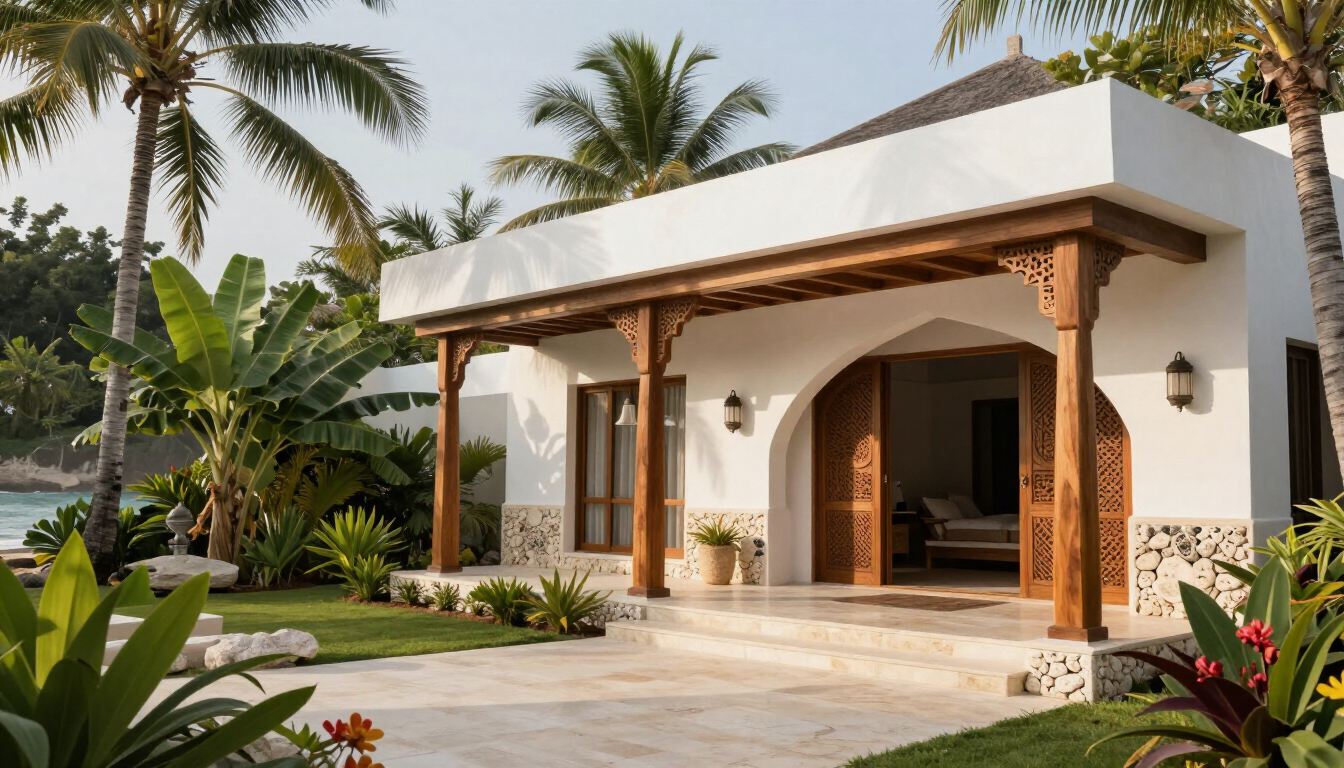
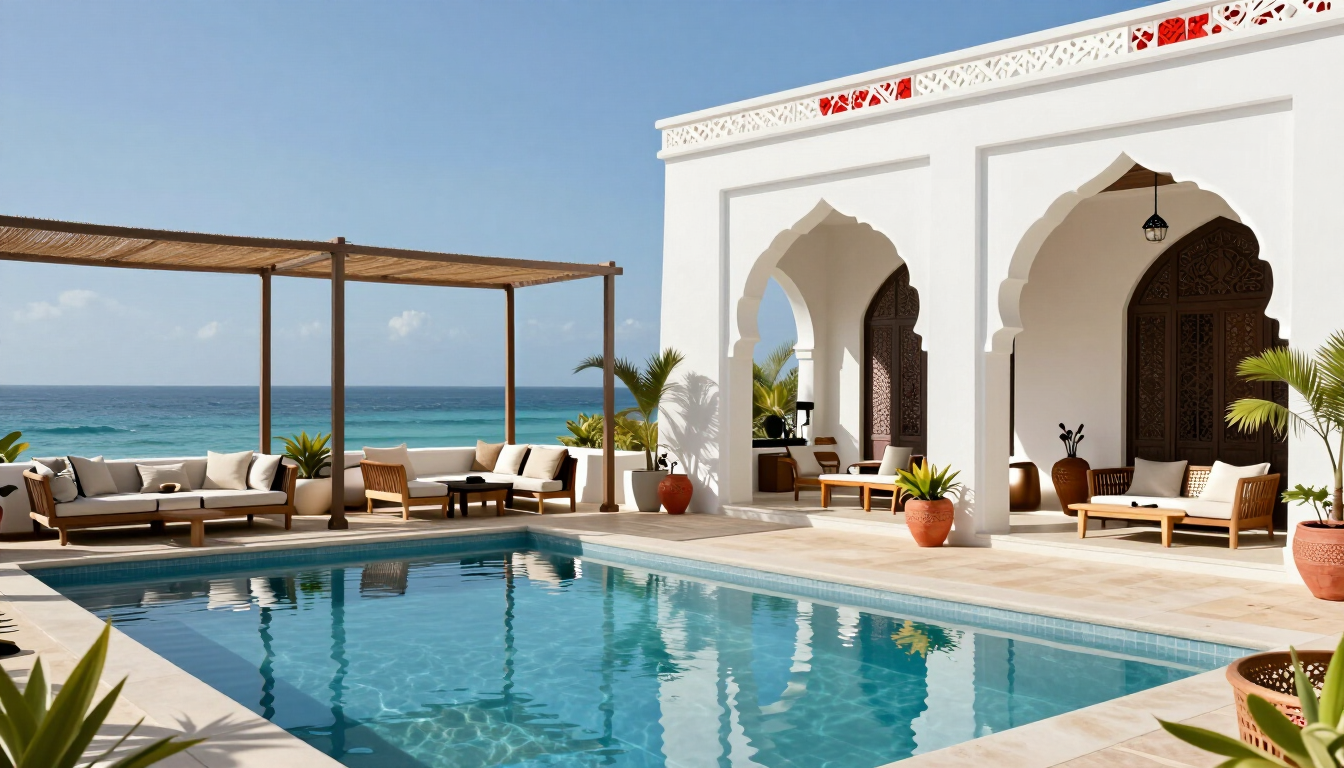
Kenyan coastal interior design combines natural materials, handcrafted furniture, light-filled spaces, and Swahili-inspired detail to create a home that feels relaxed yet refined. The approach is especially effective in Watamu, where warm climate, ocean light, and local craftsmanship can shape interiors that are comfortable, authentic, and quietly luxurious.
What defines Kenyan coastal interior design?
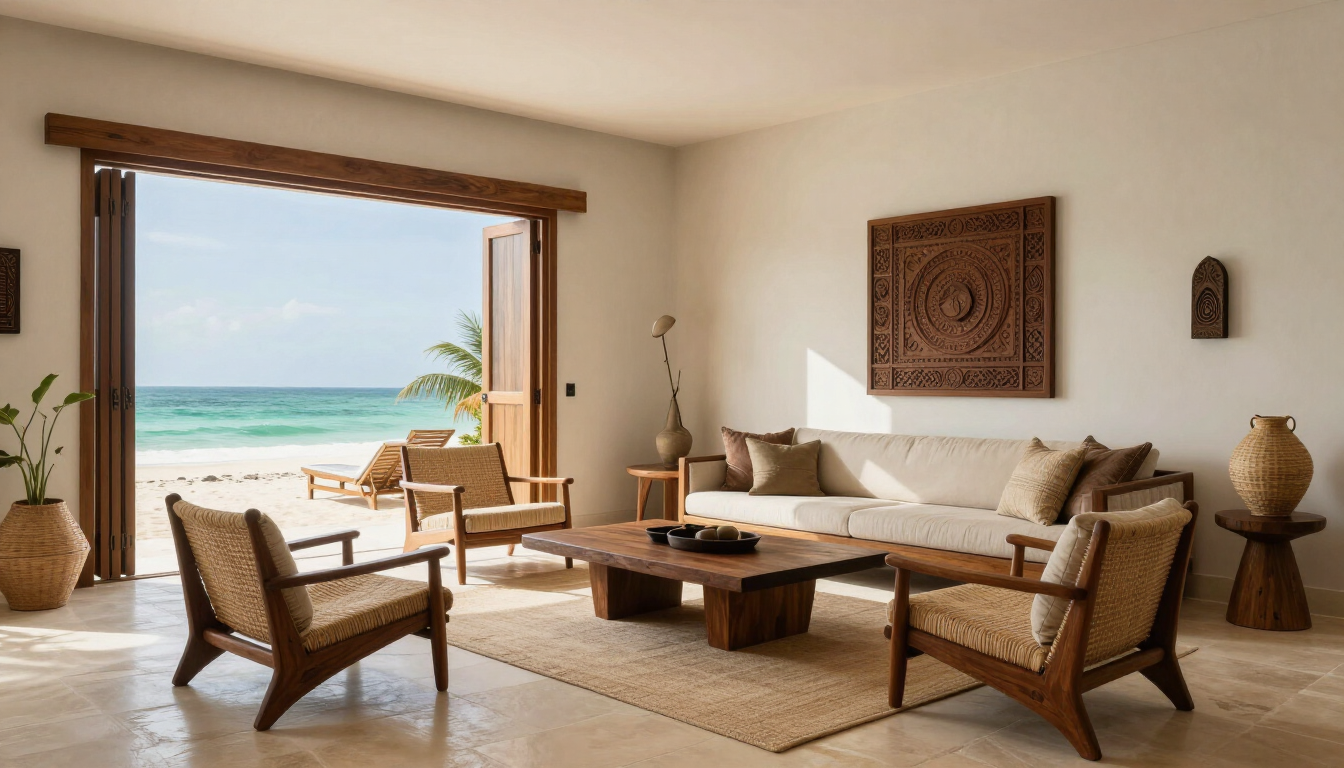
Kenyan coastal interiors are defined by a balance between simplicity and texture. Rather than filling a room with decoration, the style gives carefully selected materials, furniture, and artistic details enough space to be appreciated.
The most recognisable elements include:
- Natural stone, timber, rattan, raffia, linen, cotton, and woven fibres
- A soft palette of white, sand, cream, warm grey, terracotta, and muted blue
- Handcrafted wooden furniture with visible grain and organic shapes
- Large openings that encourage daylight, airflow, and indoor-outdoor living
- Swahili, Lamu, and Indian Ocean influences expressed through pattern and craft
The result is not a themed interior. It is a calm, contemporary home with a strong sense of place. This makes the style suitable for a permanent residence, a holiday home, or a coastal property intended for premium holiday rental.
At The Breeze Point Watamu Residence , these principles are brought together through modern minimalist apartments, spacious living areas, premium finishes, and a setting close to Watamu’s beaches, restaurants, and attractions.
Why do natural textures work so well in coastal homes?
Natural textures add warmth and depth without making a space feel visually heavy. In a bright coastal setting, smooth white walls and polished surfaces can sometimes feel stark. Materials such as woven grass, timber, stone, sisal, and linen soften that effect and create a more welcoming atmosphere.
Texture also changes throughout the day. A woven pendant casts patterned shadows in the morning, while timber develops a richer appearance in afternoon light. Linen curtains move gently with the breeze, and a rough stone surface provides contrast against a smooth plaster wall.
To introduce natural textures thoughtfully:
- Begin with one substantial material, such as a timber dining table or stone feature wall.
- Add two or three smaller layers, including a woven rug, cane chair, or linen cushion.
- Keep the colour palette restrained so the textures remain the focus.
- Mix refined finishes with imperfect, handmade elements for authenticity.
- Repeat one material in different areas to create continuity.
The key is moderation. A room does not need every coastal material at once. Two or three strong tactile details usually create more sophistication than a collection of unrelated accessories.
1. Build a palette inspired by sand, sea, and sun
A coastal colour scheme should feel connected to its surroundings without becoming predictable. Start with a light architectural base: warm white, ivory, pale sand, or soft limestone. These colours reflect sunlight and help rooms feel spacious.
Next, introduce gentle contrast. Pale timber, sandy beige, muted olive, and chalky terracotta can add warmth. Small amounts of ocean blue, deep green, or charcoal may be used in artwork, cushions, ceramics, or joinery.
A useful palette might include:
- Warm white for walls and ceilings
- Natural oak, teak, or acacia tones for furniture
- Sand and taupe for upholstery and rugs
- Terracotta or clay for selected accessories
- Deep blue or green as a restrained accent
Avoid relying on bright turquoise, nautical stripes, or excessive blue-and-white combinations. They can make a room feel more like a visual theme than a considered home. Kenyan coastal interiors are usually more successful when colour is softened and materials carry the character.
For apartments near the ocean, durable finishes matter as much as appearance. Choose washable fabrics, well-sealed timber, corrosion-resistant hardware, and flooring that can handle sand and moisture. Beauty should support practical coastal living.
2. Choose handcrafted wooden furniture with character
Handcrafted wooden furniture is one of the most effective ways to bring Kenyan coastal character into a modern interior. A carved console, low coffee table, timber bench, or substantial dining table can become a focal point while remaining practical.
Look for furniture with:
- Visible grain and a natural or lightly tinted finish
- Rounded edges and simple, generous proportions
- Evidence of handcraft, such as subtle variations or tool marks
- Strong construction suited to everyday use
- A form that feels contemporary rather than overly ornate
The best pieces create balance. For example, pair a sculptural timber coffee table with a clean-lined sofa, or place a hand-carved console against a simple plaster wall. This allows the furniture to express local craft without making the entire room feel traditional.
In a two-bedroom coastal apartment, prioritise versatile pieces. A timber bench can work in an entryway, at the foot of a bed, or around a dining table. A woven armchair can serve as reading furniture in the living room and extra seating when guests arrive.
Furniture scale is equally important. Coastal interiors benefit from visual breathing room, so avoid overcrowding. Select fewer, better pieces and allow circulation paths to remain clear.
How can wooden shading elements improve a room?
Wooden shading elements combine function and atmosphere. Screens, shutters, slatted ceilings, pergolas, and timber partitions can filter strong sunlight while adding rhythm and architectural interest.
In a coastal home, shading is not merely decorative. It can help reduce glare, support privacy, and create a transition between inside and outside. Slatted timber can also cast changing shadows across the floor, making the room feel connected to the movement of the sun.
Consider these applications:
- A vertical timber screen between the entrance and living area
- Slatted shutters that control light while preserving airflow
- A pergola over a terrace or outdoor dining area
- Timber battens behind a bed as a warm architectural backdrop
- A lightweight divider separating a work corner from the main living space
Use shading elements selectively. Repeating the same timber rhythm in two or three locations can make an apartment feel coherent, while covering every surface may reduce the sense of openness. Combine timber with white plaster, glass, linen, and stone for a lighter overall effect.
3. Create airy minimalist spaces
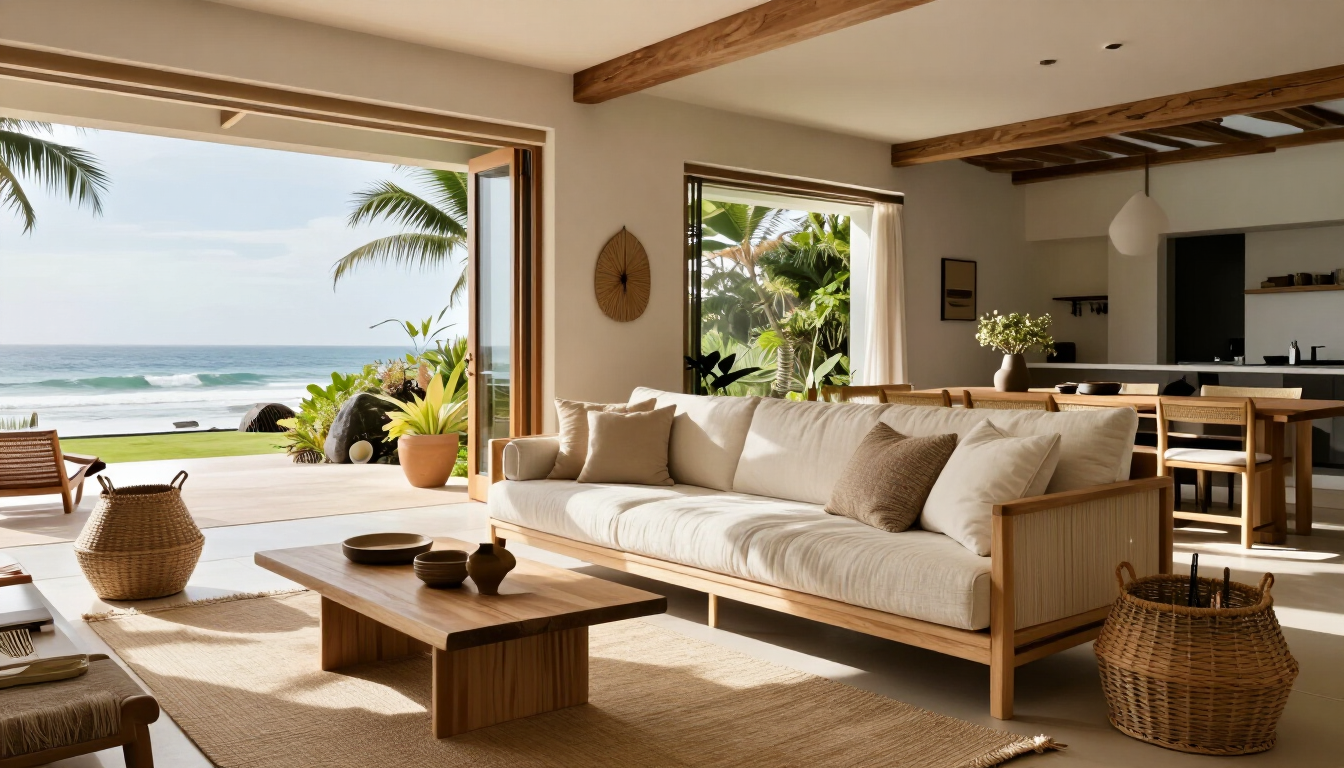
Minimalism in a coastal home should feel generous rather than empty. The aim is to remove visual clutter while keeping enough texture, comfort, and personality to make the space inviting.
Start by protecting the room’s natural assets. Keep windows clear, use low-profile furniture where appropriate, and avoid placing unnecessary objects on every available surface. A simple layout can make a room feel cooler, brighter, and easier to live in.
Practical ways to create an airy interior include:
- Use curtains made from lightweight linen or cotton
- Choose furniture with visible legs to maintain visual flow
- Repeat light tones across walls, upholstery, and flooring
- Store everyday items behind calm, uncluttered surfaces
- Group decorative objects in small, intentional arrangements
Indoor-outdoor connection is particularly valuable in Watamu. A living area that opens toward a terrace, garden, or pool can feel significantly larger than its internal footprint. Use similar materials or colours inside and outside so the transition appears natural.
At The Breeze Point Watamu Residence, private pools, spacious indoor-outdoor living, and communal amenities support this relaxed relationship between architecture and landscape. The interior should complement that experience rather than compete with it.
Swahili-inspired artistry
Swahili design can add identity to a contemporary coastal home through detail, proportion, and craftsmanship. Its influence may appear in carved timber, geometric patterns, woven baskets, handmade ceramics, arched forms, and rich but restrained ornament.
The most effective approach is selective. One carved panel, an oversized woven pendant, or a collection of locally made vessels can carry more meaning than a room filled with decorative references.
Consider introducing artistry through:
- Hand-carved screens or cabinet fronts
- Woven baskets used for storage rather than display alone
- Ceramic vessels with irregular handmade forms
- Textiles featuring quiet geometric or coastal patterns
- Framed artwork inspired by local landscapes, boats, or vegetation
Authenticity matters. Choose objects because they are beautiful, useful, or connected to the region—not simply because they appear “exotic.” Speak with local makers where possible, and allow handmade variations to remain visible.
A contemporary home can honour Swahili and Lamu influences without replicating a historic building. The goal is a respectful dialogue between local tradition and modern coastal living.
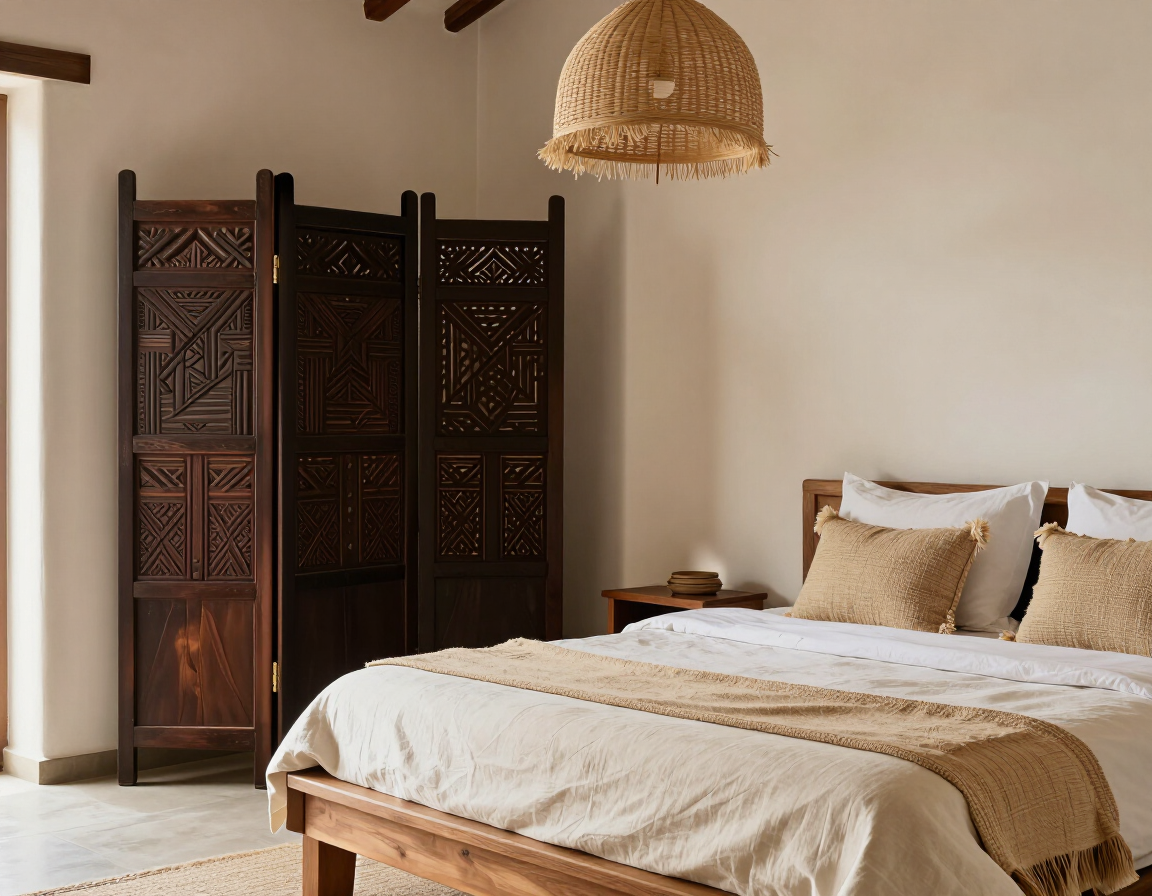
4. Make bedrooms calm and breathable
Bedrooms should be the quietest rooms in a coastal residence. Use a limited palette, breathable fabrics, and furniture that supports rest rather than visual stimulation.
Linen or cotton bedding in white, cream, or sand creates an uncomplicated foundation. Add texture through a woven throw, a timber headboard, or a small patterned cushion. Keep bedside surfaces simple and provide practical storage so personal belongings do not accumulate in view.
A timber screen can work particularly well behind the bed. It introduces a local, architectural reference while allowing air and light to pass through. If the room has a balcony or terrace, use soft curtains to provide privacy without blocking daylight.
Avoid overly glossy furniture, heavy drapes, and strong contrasting patterns. The bedroom should feel cooler and quieter than the social areas of the home.
Which materials are best for a Watamu-inspired interior?
The best materials are those that look natural, age well, and suit the coastal climate. Selection should consider maintenance as well as appearance, especially where salt air, humidity, sand, and strong sunlight are present.
Suitable choices include:
- Sealed hardwood or responsibly sourced timber for furniture and screens
- Natural stone or durable porcelain for floors and surfaces
- Linen and cotton for curtains, bedding, and upholstery
- Rattan, cane, raffia, and sisal for selected furniture and accessories
- Limewash, textured plaster, or matte paint for soft wall finishes
Protect materials without eliminating their character. Timber can be sealed while retaining its grain. Natural fabrics can be treated for durability. Woven pieces should be positioned away from persistent moisture, and outdoor furniture should be selected for exterior conditions rather than simply moved outside.
A limited material palette also makes future maintenance easier. When finishes are coordinated, replacing one cushion, chair, or accessory does not disrupt the overall design.
5. Design for holiday living and everyday comfort
A beautiful coastal interior should work when the home is occupied by owners, family, friends, or holiday guests. Durability and flexibility are therefore essential parts of the design.
Choose sofas with removable covers, dining surfaces that can tolerate regular use, and storage that makes arrival and departure simple. In bedrooms, provide hooks, luggage space, and practical bedside lighting. In living areas, combine decorative objects with useful items such as trays, baskets, and serving pieces.
For an investment property, the interior should photograph well without feeling generic. Natural light, layered textures, and a few distinctive crafted pieces create visual appeal in rental listings while giving guests a memorable experience.
The wider residence also matters. Secure parking, backup power, a gym, a communal swimming pool, and proximity to Watamu’s attractions contribute to the lifestyle that the interior promises. Prospective buyers can learn more through the About The Breeze Point Watamu page or contact the residence team to discuss ownership and availability.
A simple coastal interior checklist
Before completing a room, ask:
- Does the space feel bright, comfortable, and easy to move through?
- Are natural materials used with restraint and purpose?
- Is there at least one handcrafted or locally inspired focal point?
- Can the fabrics, finishes, and furniture handle coastal conditions?
- Does the interior connect visually with terraces, gardens, or pools?
If the answer to each question is yes, the room is likely to feel both beautiful and appropriate to its setting.
How do you create a refined Kenyan coastal interior?
Start with a light, neutral foundation, then add depth through timber, woven materials, stone, linen, and carefully chosen artwork. Keep the layout open, prioritise airflow and daylight, and use wooden screens or shutters where shade and privacy are needed.
The most successful homes do not copy a catalogue style. They combine contemporary comfort with regional character. A handcrafted bench, an artist-made ceramic, or a softly patterned textile can be enough to establish a connection to the Kenyan coast when supported by thoughtful proportions and natural light.
For homeowners and investors considering Watamu property, this approach offers a durable design direction. It feels relaxed enough for holidays, refined enough for entertaining, and practical enough for everyday living.
Final takeaway
Kenyan coastal interior design works best when natural materials, open layouts, handcrafted furniture, and Swahili-inspired details are balanced rather than overstated. Begin with warm whites and sandy tones, introduce timber and woven textures, protect daylight and airflow, and select artwork or accessories with genuine local character. In Watamu, connect the interior to terraces, pools, gardens, and the wider coastal setting. Whether you are furnishing a permanent home, holiday apartment, or investment property, evaluate every choice for beauty, durability, comfort, and a clear sense of place. Explore The Breeze Point Watamu Residence to see how these ideas translate into refined coastal living.